Helichrysum Oil for Skin: What Immortelle Can – and Can’t- Do | Updated 2026
There are some plants you appreciate for what they do, and others you fall a little bit in love with.
Helichrysum is both.
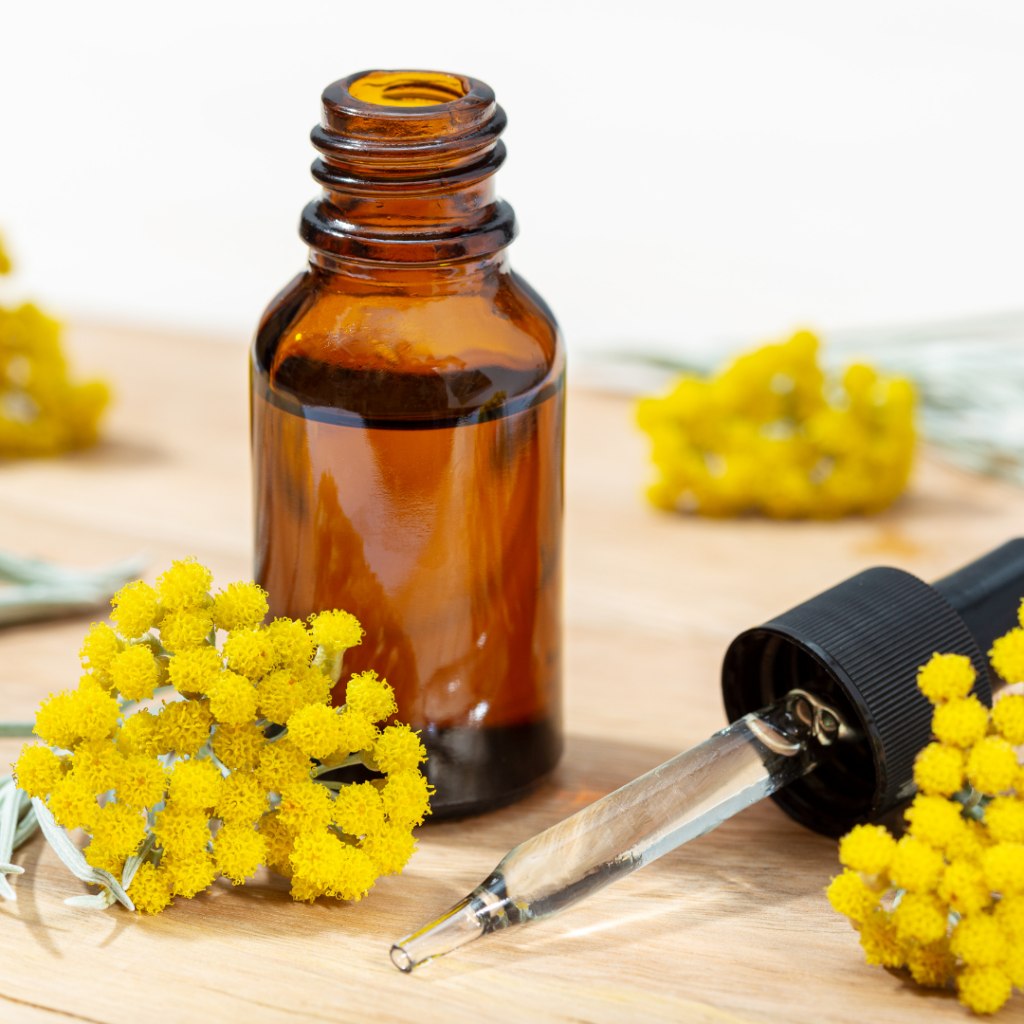
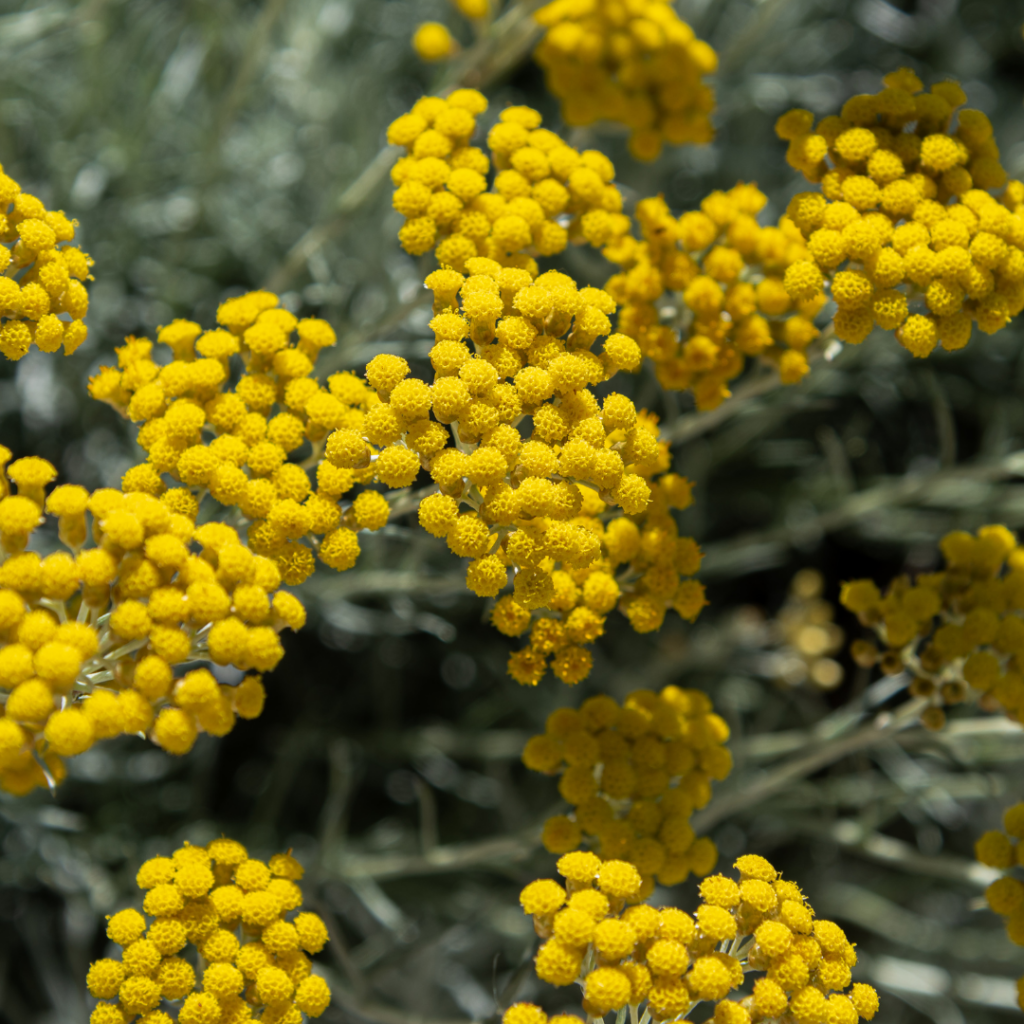
Also known as immortelle or everlasting, Helichrysum italicum is a small Mediterranean plant with silvery leaves and clusters of intensely golden flowers. Even after they are dried, the flowers hold their shape and sunny yellow color remarkably well—helping explain the romantic nickname “everlasting.”
Its scent is just as distinctive. To me, helichrysum smells a bit like honey warmed by sunshine, with notes of apple and wood. It is warm, herbaceous, slightly sweet, and difficult to compare to anything else.
It is also one of those plants that has developed an almost mythical reputation in skincare.
Search online and you may find helichrysum described as a scar eraser, collagen booster, anti-aging miracle, or even “nature’s Botox.”
As an herbalist and esthetician, I think the truth is more interesting.
Helichrysum does have some fascinating skin science behind it. But to understand what it can realistically do, we need to separate traditional herbal use from modern research—and helichrysum essential oil from helichrysum extract.
What Is Helichrysum?
Helichrysum italicum belongs to the daisy family and grows naturally throughout parts of the Mediterranean.
The name Helichrysum comes from Greek words associated with sun and gold, a fitting description of its brilliant yellow flowers.
Immortelle has a long history in European herbal traditions, especially for bruised, irritated, and injured skin. Modern research has found antioxidant, soothing, and antimicrobial activity in different preparations of the plant.
That doesn’t prove every traditional use. But it does give researchers some interesting clues about why herbalists have valued this little golden plant for so long.
Helichrysum Essential Oil and Extract Are Not the Same Thing
This is important, especially when you’re reading about helichrysum online.
Helichrysum essential oil is usually made by steam-distilling the flowering plant. This captures its aromatic compounds and gives us that beautiful, distinctive scent.
Depending on where the plant was grown and how it was distilled, the essential oil can contain compounds such as neryl acetate, alpha-pinene, and gamma-curcumene.
A helichrysum extract is made differently. Water, alcohol, glycerin, carbon dioxide, or other methods may be used to pull different compounds from the plant.
Why does that matter?
Because a study performed on one type of helichrysum extract does not necessarily tell us what a bottle of helichrysum essential oil will do.
Same plant. Different preparations. Different chemistry.
Herbalists have been paying attention to distinctions like this for a very long time.
What Can Helichrysum Do for the Skin?
Traditionally, helichrysum has been especially valued for skin that looks or feels:
- irritated or inflamed
- bruised or swollen
- delicate or stressed
- in need of a little extra recovery support
Modern laboratory research has found antioxidant and anti-inflammatory activity in Helichrysum italicum. Researchers have also begun studying how compounds in the plant may affect the skin barrier.
And this is where things get particularly interesting.
Helichrysum and the Skin Barrier
Your skin barrier is the outer protective layer that helps keep moisture in and irritants out.
Researchers studying Helichrysum italicum found that compounds in the plant appeared to influence some of the processes skin uses to build and maintain this barrier.
In laboratory skin models, they saw changes involving healthy skin-cell development, protective lipids, and ceramides—the fats that help hold the skin barrier together.
That’s intriguing, especially for someone like me who spends a great deal of time thinking about healthy skin barriers.
But it does not mean helichrysum essential oil can replace a good barrier-supporting moisturizer.
What it does give us is another clue as to why this plant has such a long history of being used on stressed and irritated skin.
Sometimes modern science begins to explain something herbalists have observed for generations.
Can Helichrysum Help Aging Skin?
This is where the research gets even more interesting.
A 2026 study tested a concentrated Helichrysum italicum extract made using carbon dioxide rather than traditional steam distillation.
Researchers compared a cream containing 0.1% of this special helichrysum extract with a cream containing 0.1% retinol. Forty-seven women completed both parts of the study.
After 28 days, the helichrysum formula produced improvements in wrinkles similar to the retinol formula under the conditions of this particular study, with less reported irritation.
Laboratory testing also found changes involving the skin barrier, renewal of skin cells, and collagen-related processes.
That certainly caught my attention.
But before we crown helichrysum the new retinol, there is an important catch.
The researchers were studying a specific concentrated extract. They were not testing ordinary helichrysum essential oil.
So no, I would not call helichrysum “natural retinol.”
What I would say is that this beautiful old medicinal plant may contain some very interesting compounds for aging skin—and I would love to see more research.
What About Collagen, Scars, and Bruising?
This is where helichrysum’s reputation sometimes gets ahead of the research.
Laboratory studies suggest certain helichrysum extracts may affect processes involving collagen. That’s promising, but it isn’t enough to say that all helichrysum products boost collagen.
The same caution applies to scars.
Helichrysum has a long traditional history of use for bruising, swelling, and injured tissue. There is even some published research involving its use after surgery.
But we don’t yet have enough good human research to call helichrysum a proven scar treatment.
For established scars, we have treatments with much stronger evidence behind them.
I think of helichrysum as a supporting botanical for stressed-looking skin, rather than a scar eraser.
And honestly? It doesn’t need to be a miracle to be useful.
Does Helichrysum Fade Dark Spots?
I would be cautious with this claim, too.
Helichrysum contains antioxidant compounds, and helping calm ongoing inflammation can be useful when you’re trying to prevent lingering discoloration after a breakout or irritation.
But I don’t consider helichrysum a primary treatment for hyperpigmentation.
Ingredients such as vitamin C, retinoids, azelaic acid, niacinamide, certain exfoliating acids, and—most importantly—daily sun protection have much stronger evidence behind them.
Helichrysum can play a supporting role.
It does not need to be the hero of every story.
Is Helichrysum Good for Sensitive Skin?
It can be, but formulation matters.
Helichrysum extracts can be lovely additions to products created for delicate or stressed skin.
Helichrysum essential oil is different. Essential oils are highly concentrated aromatic plant materials, and even beautiful botanical ingredients can irritate sensitive skin or trigger an allergic reaction in some people.
That doesn’t make essential oils bad.
It means more is not necessarily better.
If you have very reactive skin, rosacea, or a fragrance allergy, I would choose carefully. And I would not recommend applying undiluted helichrysum essential oil directly to your face.
Please don’t put neat essential oils on your face because someone on the internet told you to.
Your skin has enough to deal with.
How I Think About Helichrysum After Nearly 30 Years in Skincare
I don’t think of helichrysum as a miracle anti-aging ingredient.
I think of it as something subtler—and honestly, more interesting.
It is a beautiful botanical for formulas created around comfort, recovery, resilience, and stressed-looking skin.
Its traditional uses become particularly interesting when we compare them with what researchers are discovering about its antioxidant compounds, soothing properties, and possible relationship with the skin barrier.
And then there is the experience of the plant itself.
That remarkable aroma—honey warmed by sunshine, with a little apple and wood—creates an aromatic pause that is difficult to separate from the pleasure of using it.
Skincare is chemistry.
But it is also touch, scent, ritual, and the simple act of paying attention to your own skin for a few minutes.
There is room for both.
So, Is Helichrysum Worth the Hype?
Some of it.
Helichrysum is not Botox in a flower.
It is not a proven scar eraser.
And it isn’t going to magically replace your retinol.
Helichrysum italicum is something much more believable: a fascinating Mediterranean botanical with centuries of traditional use, antioxidant and soothing plant chemistry, intriguing research around the skin barrier, and promising early research for aging skin.
That’s already plenty impressive.
Plants don’t need superhero marketing to be worthwhile.
Sometimes the most respectful way to talk about a plant is not to make it miraculous.
It’s simply to tell the truth about how remarkable it already is.
Frequently Asked Questions About Helichrysum for Skin
Can I put helichrysum essential oil directly on my face?
I wouldn’t recommend applying undiluted helichrysum essential oil directly to your face. Essential oils are highly concentrated, and even botanicals known for soothing properties can cause irritation or allergic reactions in some people.
For facial skincare, I prefer helichrysum essential oil in a thoughtfully formulated product where it is used at an appropriate concentration. If your skin is very sensitive, rosacea-prone, or reactive to fragrance, a helichrysum extract may be a better choice than the essential oil.
Is helichrysum good for wrinkles and aging skin?
Possibly—and this is an exciting area of research.
Laboratory studies have found effects involving antioxidants, the skin barrier, and collagen-related processes. A 2026 human study also found promising improvements in wrinkles from a cream containing a specialized Helichrysum italicum extract.
However, that doesn’t mean every helichrysum product will have the same effect. The extract used in the research is different from ordinary helichrysum essential oil.
For now, I think of helichrysum as a promising supporting ingredient for healthy aging skin, rather than a replacement for proven ingredients such as retinoids, vitamin C, or sunscreen.
Does helichrysum oil help scars?
Helichrysum has a long traditional history of use for bruised, injured, and stressed skin, which is one reason it frequently appears in products marketed for scars.
However, we don’t currently have strong enough human evidence to call helichrysum a proven scar treatment.
It may be a useful supporting botanical, but established scars—especially acne scars—often need treatments specifically designed to address changes in collagen and skin structure.
Does helichrysum help dark spots or acne marks?
Helichrysum has antioxidant and soothing properties, which may make it helpful in formulas designed to calm stressed or inflamed skin. That can be useful because inflammation often contributes to the discoloration left behind after a breakout.
However, I wouldn’t rely on helichrysum alone to fade post-inflammatory hyperpigmentation or other dark spots. Daily sunscreen and well-studied ingredients such as vitamin C, retinoids, azelaic acid, niacinamide, and appropriate exfoliating acids generally have stronger evidence.
Is immortelle the same thing as helichrysum?
Usually, yes. Immortelle and everlasting are common names frequently used for Helichrysum italicum.
However, Helichrysum is actually a large genus containing hundreds of species. If you’re choosing a product because of research you’ve read about Helichrysum italicum, check the ingredient list rather than relying on the word “immortelle” on the front of the package.
What’s the difference between helichrysum essential oil and helichrysum extract?
They come from the same plant but contain different mixtures of plant compounds.
Essential oil is usually produced through steam distillation and captures many of helichrysum’s volatile aromatic compounds. Other extracts may be made with water, alcohol, glycerin, carbon dioxide, or other methods that capture different parts of the plant’s chemistry.
That’s why research on a particular helichrysum extract can’t automatically be applied to helichrysum essential oil—or vice versa.
Same plant, different preparation, different chemistry.